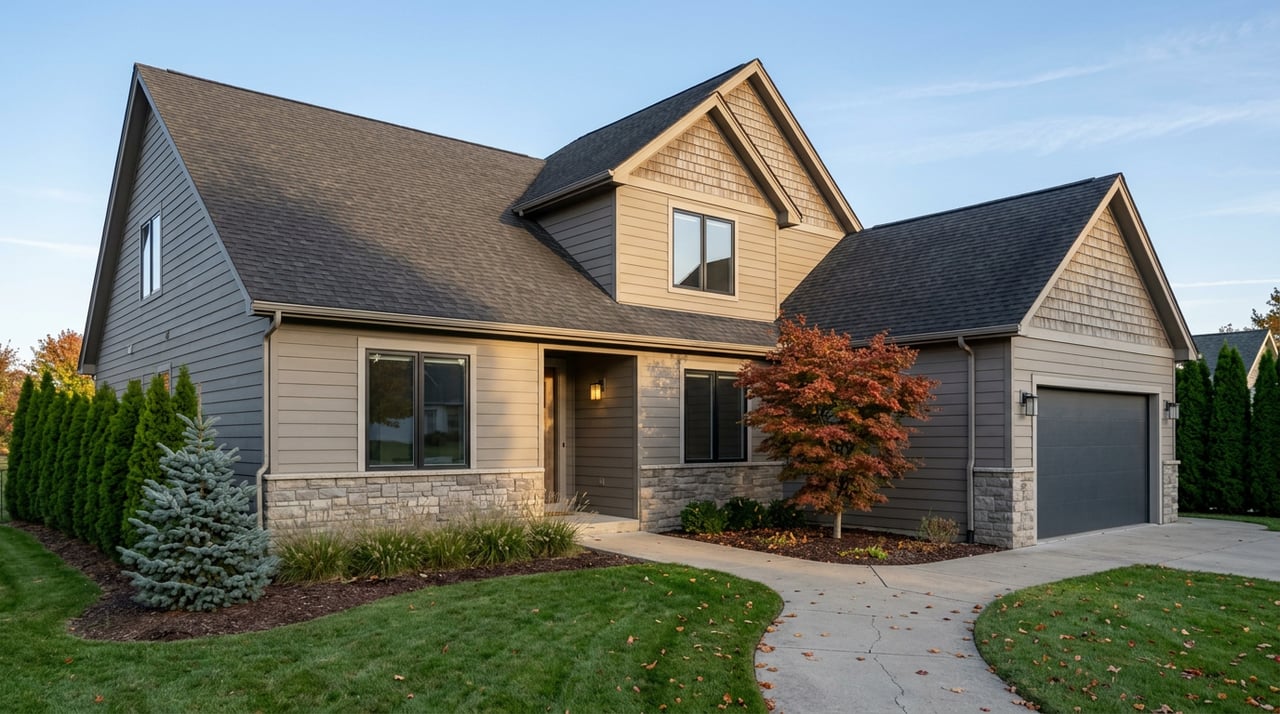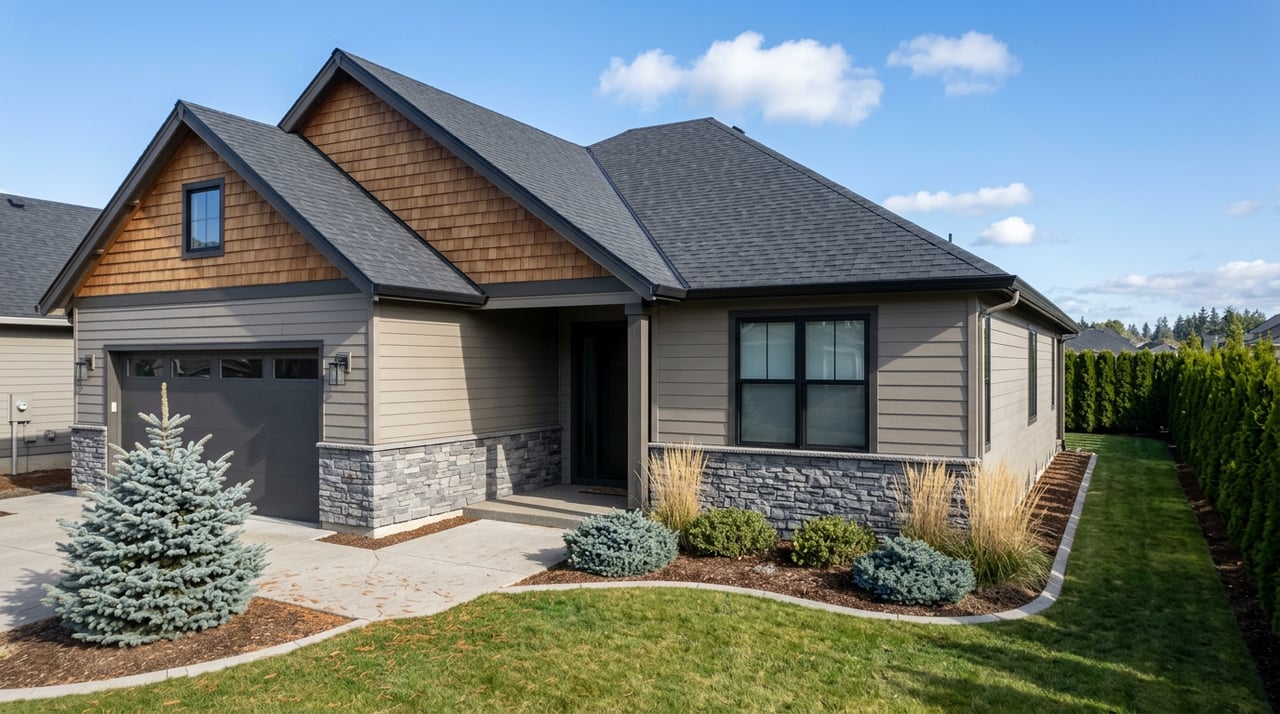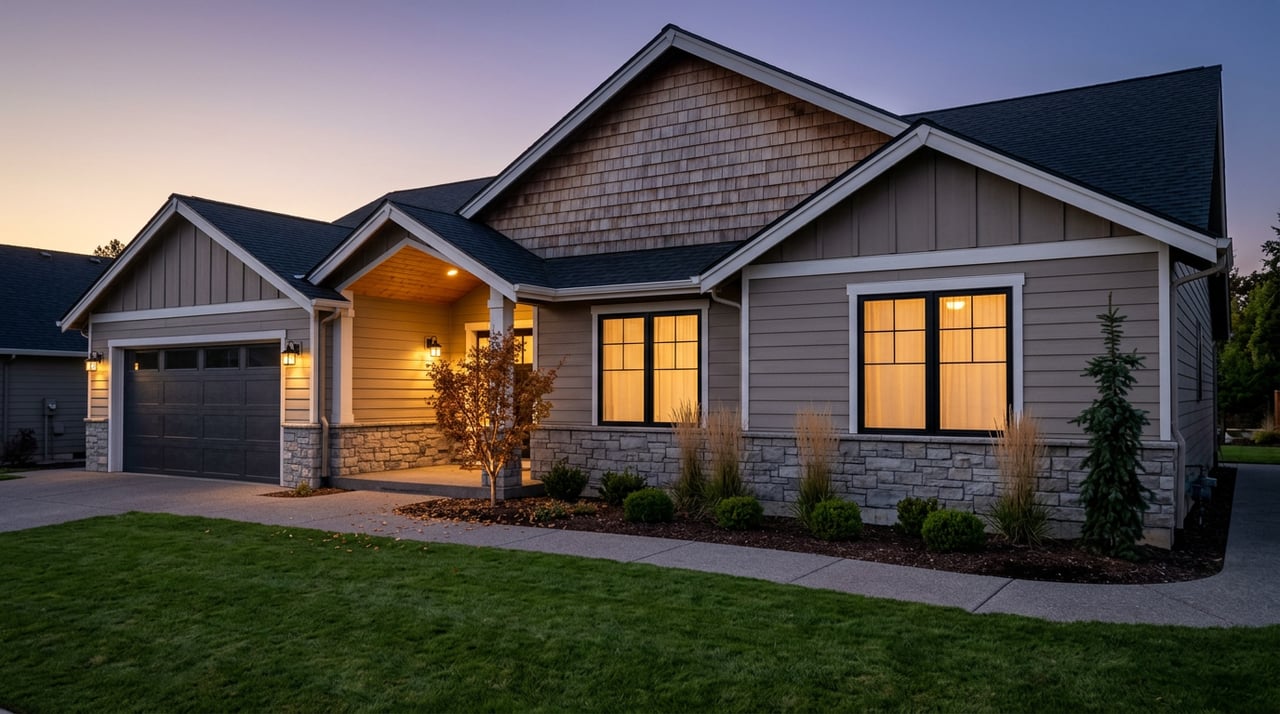
Picture two nearly identical houses, same era, same square footage, same $458,000-ish price tag. One sits in Spokane Valley. The other is ten minutes down I-90, just across the state line in Post Falls. Both sellers accept an offer on the same day. Both sign a stack of paperwork that looks almost identical.
Then one of them writes a check at closing that the other never has to write at all. Not because of a negotiation, a repair credit, or a slow appraisal. Because of which side of the line the house sits on.
The check only one seller writes
Washington charges a Real Estate Excise Tax, or REET, on nearly every property sale in the state. It's paid by the seller, calculated on the full sale price rather than on profit, and structured in tiers. The state's portion runs 1.1 percent on the first $525,000 of a sale, with higher rates kicking in above that threshold. Cities and counties can layer on a local portion too, typically in the quarter- to half-percent range depending on jurisdiction.
Run that against the Spokane Valley residential median of $458,645, which is what the city itself reported for March 2026 citing the Spokane Realtors Association. At that price, the entire sale falls in the lowest REET tier. The state portion alone comes to roughly $5,050. Add a typical local component and a Spokane Valley seller is looking at something in the neighborhood of $5,000 to $7,300, due at closing, no negotiation possible.
Cross the line into Post Falls and sell an identically priced house, and that line item does not exist. Idaho law does not just currently decline to tax real estate transfers. Idaho Code 63-307A explicitly bars the state and every county and city in it from ever imposing a real estate transfer or excise tax on a deed. It's not a policy choice that could change with the next legislative session. It's a standing prohibition written into how Idaho structures property conveyance.
That is the piece of this comparison that shows up nowhere on a listing sheet and rarely gets mentioned until a seller is staring at a closing disclosure. It is also the cleanest example of a rule that most cross-border comparisons skip past on their way to the bigger, more familiar headline: property taxes and income taxes.
Meanwhile, the property tax bill runs the other way, every single year
Here the direction flips. An analysis of county-level effective property tax rates published by The Motley Fool in December 2025 put Spokane County among Washington's higher-taxed counties at roughly 0.84 percent of assessed value, while it listed Kootenai County among Idaho's lowest at roughly 0.36 percent. Applied to that same $458,645 home, the annual property tax bill comes out to about $3,853 on the Spokane Valley side and about $1,651 on the Kootenai County side. A gap of roughly $2,200 a year, repeating for as long as you own the house.
Part of what keeps Kootenai County's number low is Idaho's Homeowner's Exemption, which shields 50 percent of a primary residence's assessed value from taxation up to a cap of $125,000. Washington has nothing equivalent for the general homeowner population. Its property tax relief programs are targeted narrowly at seniors and disabled residents based on income, not offered broadly to every owner-occupant the way Idaho's exemption is.
Here is the same comparison laid out side by side, using that same $458,645 value as the reference point:
| Spokane Valley, WA (Spokane County) | Post Falls, ID (Kootenai County) | |
|---|---|---|
| Effective property tax rate | ~0.84% | ~0.36% |
| Estimated annual property tax | ~$3,853 | ~$1,651 |
| Broad primary-residence exemption | None for general owners | 50% of assessed value, capped at $125,000 |
| Real estate transfer tax at sale | Real Estate Excise Tax, ~1.1%+ of sale price | None, barred by state law |
| State sales tax | ~8.9% combined in the Spokane Valley area | 6% flat statewide, no local add-on |
| State income tax on wages | None currently | Flat 5.3% |
Figures reflect publicly reported rates as of late 2025 and early 2026 and will shift with each county's next assessment cycle, so treat them as a framework for the math rather than a fixed number to plug into a mortgage calculator.
Why the millionaire's tax and the capital gains tax don't touch this at all
Anyone who has spent time reading Washington tax news in the last year has probably heard about two things that sound alarming for a home seller. In March 2026, Governor Bob Ferguson signed SB 6346, a 9.9 percent tax on household income above $1 million, though it doesn't take effect until January 2028. Washington also has an existing capital gains excise tax, ranging from 7 to 9.9 percent on long-term gains above roughly $262,000 for 2026.
Neither one applies to a straightforward home sale. Washington's own Department of Revenue states plainly that the state's capital gains tax does not apply to the sale or exchange of real estate, regardless of how long the seller owned the property, whether they lived in it, or how large the gain was. The millionaire's tax targets income, and a home sale that qualifies for the standard federal primary-residence exclusion doesn't generate taxable income in the first place for most sellers.
So the number that actually shows up on a Spokane Valley closing statement is the REET, not the headline-grabbing tax everyone has been reading about. That distinction matters for a relocating buyer trying to figure out what they're actually walking into, because the tax that gets the most news coverage is the one least likely to touch them, while the tax that quietly appears on every sale gets almost no coverage at all.
What this means if you're choosing a side of the line
Put the two mechanisms next to each other and a pattern emerges that a simple rate comparison misses. Washington's cost lands once, at the moment of sale. Idaho's advantage compounds every year the home is held. That means the "cheaper" side of the state line depends less on the sticker price and more on how long you expect to own the house.
- If you're planning to hold for two to three years or less, the one-time REET gap on the Washington side and the accumulated property tax gap on the Idaho side land in roughly the same range, meaning the state line itself may not be the deciding factor.
- If you're planning to hold longer, the annual property tax difference keeps adding up year after year, while the REET is a fixed, one-time cost that never grows once you've paid it.
- If you're the kind of buyer weighing a lakefront second home or an investment property you might sell again within a few years, the transaction-side cost deserves more weight than it usually gets in these comparisons.
- If you're relocating permanently, as many buyers moving into Post Falls or Spokane Valley are, the annual gap is the number that will actually show up on your household budget every year, not just once.
None of this means one side of the line is the obvious answer. It means the honest answer depends on a timeline, not just a tax rate, and that's the piece worth working through with someone who watches both counties' numbers regularly rather than pulling a single statistic off a national ranking site.
A few questions worth answering directly
Does Washington's new millionaire's tax apply to proceeds from selling my house? No. The tax targets income above $1 million and doesn't take effect until January 2028. A home sale that qualifies for the standard federal exclusion on gains doesn't generate the kind of taxable income the law is aimed at.
Will I owe a transfer tax if I buy a home in Post Falls? No. Idaho Code 63-307A prohibits the state and every county and city within it from imposing a real estate transfer or excise tax. That's a structural feature of Idaho law, not a temporary policy.
Is the property tax gap between the two counties guaranteed to stay this size? No. Both counties reassess property values and adjust levies on their own cycles. The figures here reflect rates reported in late 2025 and early 2026. Anyone weighing a purchase on either side of the line should confirm current numbers with the relevant county assessor before finalizing a budget.
If you're weighing Spokane Valley against Post Falls, Coeur d'Alene, or anywhere else along that stretch of the Inland Northwest and want someone to walk through what the timeline math actually looks like for your specific situation, Cross Realty works both sides of this border every week. Schedule a free consultation and we'll go through the numbers together before you write any offer.