Finishing a basement can add comfortable living space, boost resale appeal, and make your home work harder for you. In Spokane Valley, a basement project goes smoothly when you plan for below‑grade conditions and follow local permitting steps. This guide walks you through feasibility, code basics, budgeting, design, hiring, and execution so you can move forward with confidence.
Basement Finishing: What to Know First
Basements are different from upstairs rooms. They sit below grade, so moisture, insulation, ventilation, and life‑safety details matter more. Spokane Valley also follows the Washington State Building Code with local amendments, so permits and inspections are part of the process. The good news: with a clear plan, the steps are manageable and protect your home’s value.
Common questions we hear include: Do I need a permit? How do I handle moisture? What will it cost? How long does it take? You will find plain‑English answers throughout this guide, with links to official resources so you can verify the latest rules.
Assess Your Basement’s Readiness
Before you sketch layouts or price flooring, take a close look at conditions. A simple assessment now can save time and money later.
Moisture, drainage, and air quality basics
Start by confirming the space is dry and healthy.
- Walk the perimeter and look for signs of water: efflorescence on walls, musty odors, rust on metal, or staining along the slab. If you see issues, address drainage first with grading, gutters, downspouts, and functioning foundation drains or sump systems. Interior fixes can help, but long‑term solutions often start outside as general waterproofing guidance explains.
- Test for radon. Spokane County sits in an area with elevated radon potential, and basements often show higher levels. The EPA recommends mitigation at or above 4 pCi/L, so plan a test early and design for mitigation if needed per EPA guidance.
- If you discover mold, remember that moisture control is the key. Cleanups should follow health guidance and happen before you close walls and ceilings per the EPA’s homeowner guidance.
Ceiling height, egress, and utility constraints
Confirm that the space can be made safe and comfortable:
- Ceiling height and obstructions: Note ductwork and beams. If clearances are tight, you may need soffits or re‑routing in limited areas.
- Stairs: Check rise/run and headroom. Steep or narrow stairs can limit furniture movement and may need upgrades during the project.
- Egress for bedrooms: If you plan a sleeping room, code requires an emergency escape and rescue opening with specific size and height limits, and a compliant window well if below grade. Planning this early avoids costly rework see a plain‑language summary of egress requirements.
- Utilities: Identify the location of the panel, water heater, furnace, and cleanouts. Keep required clearances and service access in your layout.
Decide full finish, partial finish, or flex space
You do not have to finish everything at once. Consider:
- Full finish: Best when you want a cohesive lower level with multiple rooms and a bath. Higher cost and longer timeline.
- Partial finish: Target a family room, office, or gym and leave mechanical/storage areas unfinished to manage budget.
- Flex approach: Frame for future rooms and run rough‑ins now, then phase finishes later.
Align scope with how you will use the space in the next 3 to 5 years and what will help resale in your neighborhood.
Permits and Code: What to Know Locally
When permits are typically required
In Spokane Valley, residential remodels that add bedrooms, alter egress, add plumbing, HVAC, or make structural changes generally need permits. The city enforces the Washington State Building Code and Energy Code with local amendments, and sub‑permits are common for plumbing and mechanical work per Spokane Valley’s permit resources and trade permit guidance. Electrical permits and inspections in Washington are often handled by Labor & Industries unless a city runs its own program, so confirm where to obtain your electrical permit for this project as L&I explains.
Washington adopted the 2021 model codes with state amendments effective in 2024, so your plans should follow the current editions and any Spokane Valley amendments see the State Building Code Council and Spokane Valley code adoption.
Permits protect safety and resale. Appraisers and buyers often look for permitted work, and final inspections create a clear record.
Common code topics for basements
Your plan reviewer will check for the basics that make a basement livable:
- Safe escape from sleeping rooms and proper window wells where required
- Smoke and carbon monoxide alarms added and interconnected as needed for new sleeping areas
- Adequate insulation, continuous air sealing, and vapor control suited to below‑grade walls and slab edges under the state energy code
- Proper electrical circuits, lighting, GFCI/AFCI protection where required, and panel access
- Plumbing venting and drainage for new bathrooms, with approved discharge for sump systems
If you are adding a bedroom, map the egress window location first. If the opening is below grade, your design will need a compliant well and ladder. Address these details in your drawings before you apply see the egress overview and coordinate energy code details with your plan reviewer via the Washington State Energy Code page. For smoke and CO alarms, follow state requirements and manufacturer instructions when adding new sleeping areas see WAC reference.
Coordinate inspections and approvals
Expect a straightforward sequence: submit plans → receive permit → complete rough framing, plumbing, mechanical, and electrical → pass rough inspections → insulate → hang drywall and finishes → final inspections. You can apply and schedule inspections through the city’s online portal per Spokane Valley’s Permit Center. Plan your timeline around inspection availability, and avoid covering work before it is inspected.
Budget, Costs, and Value
Build a line‑item budget that sticks
Create a simple worksheet that includes:
- Design and permits
- Demo and waterproofing repairs (if any)
- Framing and stair upgrades
- Electrical, lighting, and low‑voltage
- HVAC additions or extensions and ventilation
- Plumbing for bathrooms or wet bars
- Insulation and air sealing
- Drywall and paint
- Flooring and trim
- Doors, hardware, and cabinetry
- Fixtures and allowances (lighting, bath, and hardware)
Local estimates often cluster around the low‑to‑mid $40s per square foot, with a broader Spokane‑area range of roughly 33 to 61 dollars per square foot for a typical finish. Adding a bathroom, high‑end finishes, or major waterproofing can push costs higher see regional cost context. If an egress window is needed, budget several thousand dollars per opening due to cutting the foundation, adding a well, and finishing general cost overview.
Plan for contingencies and scope creep
Set aside 10 to 20 percent for surprises like hidden moisture, structural fixes, or panel upgrades. Lock selections early to avoid change orders. If you plan to phase the project, rough‑in for future rooms now while walls are open.
Understand resale and appraisal impact
Finished basements increase usable space, but value depends on quality, permits, bedroom/bath count, and how well the layout lives. Proper egress in any bedroom, documented inspections, and sound moisture control are often more important to buyers than luxury finishes. For many homes, a well‑lit family room, a legal guest suite, and good storage deliver the best return.
Design a Basement That Lives Well
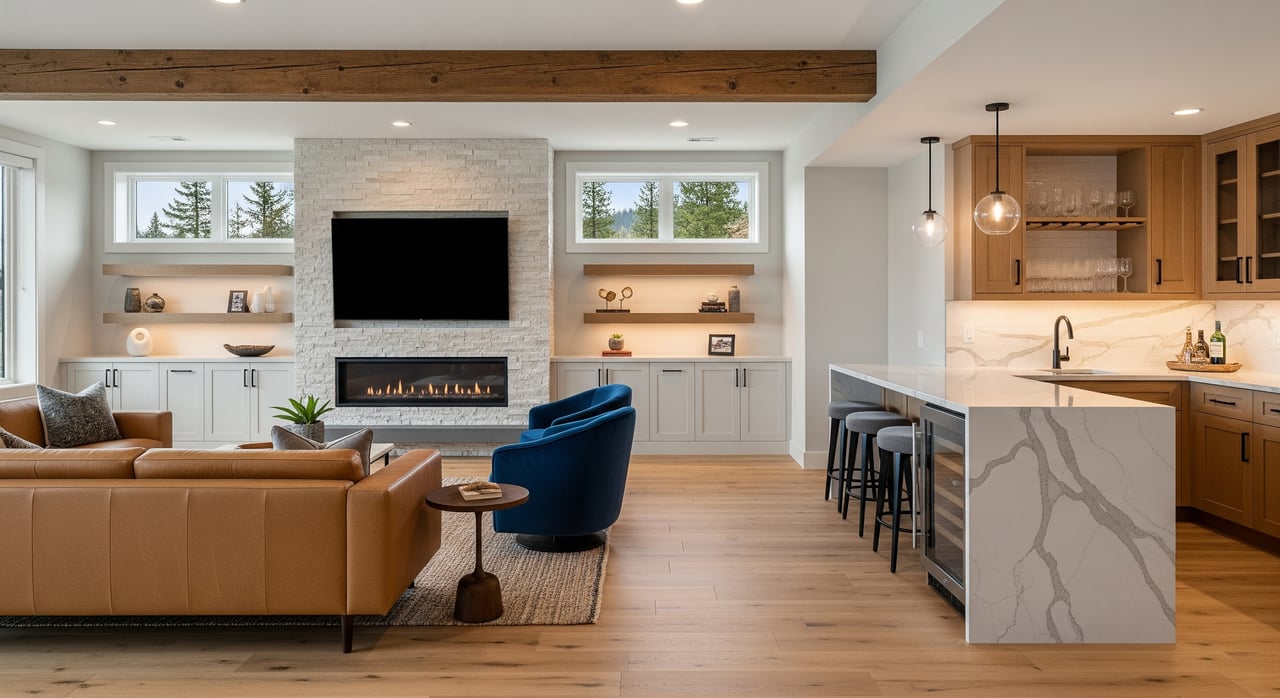
Layout zoning and room purposes
Organize the plan so movement feels natural:
- Place the media room away from bedrooms to manage noise.
- Keep a bathroom near the main activity zone or guest suite.
- Group mechanicals and storage along one wall to free up open areas.
- If you want a home office, give it a door and a quiet corner.
Lighting, sound, and comfort strategies
- Layered lighting: combine recessed cans with surface fixtures, lamps, and task lighting. Add dimmers for flexibility.
- Sound control: use insulation in ceiling joists and select resilient channels or sound‑rated drywall under bedrooms.
- Comfort: plan for balanced heating and cooling, with supply and return air designed for the new rooms. Insulate below‑grade walls per the state energy code and seal air leaks to reduce drafts energy code reference.
Storage, laundry, and mechanical access
Keep service areas practical:
- Provide clearances around the furnace, water heater, electrical panel, and cleanouts.
- Use closets or built‑ins along walls for toys, seasonal gear, and hobby supplies.
- If laundry stays in the basement, design for bright lighting, a folding surface, and moisture‑tolerant finishes.
Finishes that handle below‑grade spaces
Choose materials that can handle occasional humidity:
- Flooring: luxury vinyl plank, tile, or engineered products suited to basements. Use subfloors or underlayments that handle vapor where needed.
- Walls: assemblies that include proper insulation and vapor control for below‑grade concrete.
- Baths: backer boards, quality ventilation, and sealed grout. Vent fans should exhaust outdoors and be sized for the room.
Choose Pros and Manage the Build
Vet contractors and compare bids
- Verify licensing, insurance, and recent basement projects.
- Ask who will pull each permit and coordinate inspections. Mechanical and plumbing permits run through the city; electrical permits are often through L&I in Washington unless noted otherwise city trade permits and L&I basics.
- Request detailed, apples‑to‑apples scopes with allowances and a payment schedule tied to milestones.
Timeline from demo to final walk‑through
A typical flow looks like this: planning and design → permit review → waterproofing or repairs → framing and rough‑ins → rough inspections → insulation → drywall and prime → trim, cabinets, tile, and paint → fixtures and finish electrical/plumbing → final inspections → walk‑through. Use the city’s online portal to schedule inspections and track status per the Permit Center.
DIY vs. pro: where to draw the line
Many owners handle demo, painting, or installing simple flooring. Leave structural changes, egress window cutting, new circuits, panel work, HVAC changes, and plumbing rough‑ins to licensed pros. Electrical work generally requires a separate permit and inspection in Washington see L&I’s permitting overview.
Plan Your Basement Project With Confidence
A comfortable, code‑compliant basement starts with a dry, healthy shell, a smart layout, and documented permits. If you are comparing homes with unfinished basements or planning a renovation after closing, we can help you weigh feasibility, value impact, and neighborhood norms. Have questions about timing, permits, or resale in Spokane Valley? Schedule a friendly consult with Ray Cross. We will share local insights, connect you with trusted pros, and help you plan a project that fits your goals.
FAQs
Do I need a permit to finish my basement in Spokane Valley?
- Most projects that add bedrooms, plumbing, HVAC, change egress, or alter structure require permits. Apply through the city’s portal and plan for inspections to document the work city permit guidance.
Who issues electrical permits for my project?
- In Washington, electrical permits and inspections are often handled by Labor & Industries unless a city runs its own program. Confirm your project’s path and secure the correct permit before work begins L&I overview.
What if I want a bedroom in the basement?
- Bedrooms must have a compliant emergency escape and rescue opening. Plan the egress window and window well early to meet size and height limits and avoid rework egress primer.
How should I handle moisture before finishing?
- Fix drainage first: grading, gutters, downspouts, and foundation drains or sump systems. Address leaks and mold before framing and insulation moisture guidance and EPA mold basics.
Is radon a concern in Spokane Valley?
- Yes, many areas show elevated potential. Test before or during planning, and design for mitigation if levels are at or above 4 pCi/L EPA radon map and action level.
What insulation and energy rules apply?
- Washington’s energy code sets minimum insulation and air‑sealing standards for below‑grade walls and slab edges. Coordinate assemblies with your plan reviewer to meet current requirements state energy code.
Where can I schedule inspections and track my permit?
- Use Spokane Valley’s online permit portal to apply, upload plans, pay fees, and schedule inspections Permit Center.
How much should I budget per square foot?
- Regional estimates often range from about 33 to 61 dollars per square foot for a typical finish, with many projects landing in the low‑to‑mid 40s. Scope and selections will move the number regional cost context.