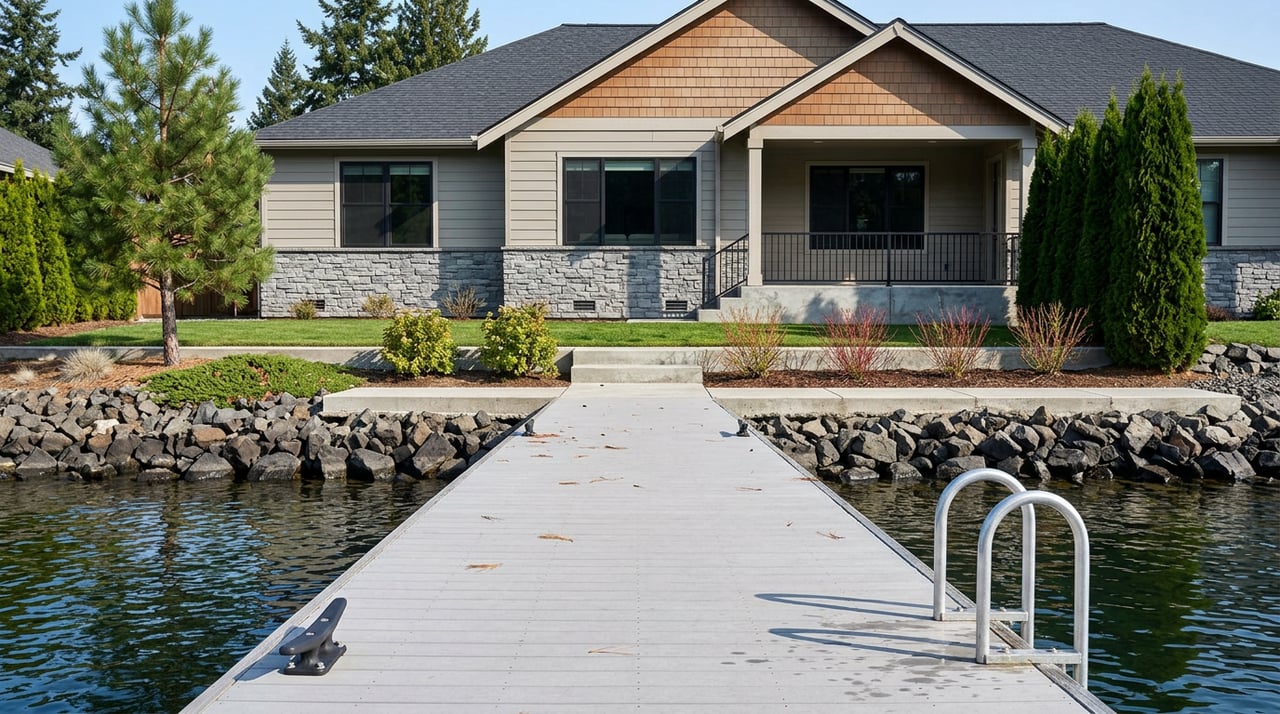
If you picture mornings on your own dock, coffee in hand as the Spokane River drifts by, you are not alone. River and waterfront homes in Post Falls are limited and in demand, so it pays to understand pricing, permits, inspections, and seasonal quirks before you start touring. In this guide, you’ll get a clear look at what waterfront costs, what to inspect, who regulates docks and shoreline work, and how to be a competitive buyer. Let’s dive in.
Where you’ll find waterfront in Post Falls
Waterfront in Post Falls concentrates along the Spokane River, with pockets of single-family homes, community-dock neighborhoods, and a few river-edge condo buildings. Supply is tight, and every site is unique. Factors like frontage, bank condition, depth at the dock, and access to no‑wake zones can vary street by street.
If you are targeting a low-maintenance setup, riverfront condos can be a good entry point. If a private dock or larger boat lift is a priority, focus on single-family stretches with established moorage or community docks.
What it costs today
Recent public listing snapshots suggest these broad bands for Post Falls waterfront as of early 2026:
- Riverfront condos and smaller waterfront units: roughly low six figures to around $1 million or more.
- Single-family riverfront homes and improved lots: commonly about $900,000 into the multi‑million range.
- Trophy or estate-level waterfront: often $2 million to $4 million plus.
- Vacant riverfront lots: smaller or narrow-frontage parcels sometimes appear from the high $500,000s into $1 million plus, with pricing heavily tied to frontage feet and buildability.
Citywide (all-property) medians in Post Falls have hovered in the low-to-mid $500Ks in recent summaries, but true waterfront trades at a clear premium. Inventory shifts month to month, so your agent should anchor pricing to the latest comps and on-market data at the time you write an offer.
Why ranges vary so much
- Frontage and water access. More usable frontage and a permitted dock typically command higher prices.
- Depth and boatability. Seasonal depth at the dock, current speed, and debris loads influence value for boaters.
- Bank condition and stabilization. Riprap or engineered shorelines with proper permits often reassure buyers; unstable banks can reduce value.
- Home quality and privacy. Newer construction, modern systems, and quiet settings add a premium.
How Post Falls compares nearby
- Coeur d’Alene: Citywide pricing is similar or slightly higher, and true lakefront is generally a step up in price due to scarcity and resort appeal.
- Liberty Lake (WA): Overall medians are in a similar band to Post Falls, but waterfront supply is smaller and falls under Washington jurisdiction, which means different permitting rules.
Seasonality, flows, and lifestyle on the river
Spokane River levels shift with snowmelt and precipitation, and pool levels are influenced by operation of the Post Falls Dam. Expect higher flows in spring and lower, calmer conditions in late summer. For any specific address, check the Spokane River near Post Falls gauge and review seasonal low flows when judging dock depth. You can pull real-time and historic flows using the USGS NWIS tool at the Post Falls site. Review the USGS Spokane River gauge near Post Falls.
Plan for periodic debris and logjams, especially after runoff or storms. If you prefer quieter water for paddling, pay attention to no‑wake zones and local boating patterns along your target stretch.
Water quality in the Spokane River has been the focus of regional work to reduce PCBs. If you or your guests plan to fish and eat local catch regularly, review the Spokane River PCB reduction plan and current state advisories. For context, see the region’s plan to reduce PCBs in the Spokane River.
Permits and rules that surprise buyers
Waterfront in Post Falls involves multiple layers of regulation. Before you make an offer, ask for the permit history of any dock, seawall, riprap, stairs, tramway, or shoreline fill.
- Kootenai County Shoreline Management. The county regulates a 25‑foot shoreline management area landward of the ordinary high water mark (OHWM). Certain activities are limited or require permits. Start with the county’s overview of the Shoreline Management Area.
- Idaho Department of Lands (IDL) and the Lake Protection Act. Docks, riprap, boat garages, and other encroachments on navigable beds generally require encroachment permits and public notice. You can see how these appear in regional legal notices, which often cite IDL applications. Review an example of IDL-related legal notices in Kootenai County. For a plain‑English program overview, read the Idaho Lake Protection Act summary.
- U.S. Army Corps of Engineers (USACE). In‑water and over‑water work can trigger Department of the Army authorization under Nationwide or individual permits. Ask for copies of any prior USACE verifications. Learn more on the USACE Regulatory Program.
- Idaho Department of Environmental Quality (IDEQ). Dredging or in‑water fill often requires a Section 401 water quality certification. Your contractor or engineer should verify requirements with IDEQ.
- City of Post Falls vs. Kootenai County. Inside city limits, local building and zoning permits apply. Outside city limits, county rules apply. Check jurisdiction first, then pull the permit file.
- Title and the OHWM. In Idaho, the OHWM is a key legal boundary that affects shoreline setbacks and state ownership of beds. A recent survey that locates the OHWM is crucial. Idaho case law underscores the state’s authority to regulate encroachments in navigable beds. See relevant context in this Idaho Supreme Court decision on shoreline regulation.
If you plan future shoreline work, also review the county’s land use code and site‑disturbance requirements. A helpful reference copy is available here: Kootenai County Land Use and Development Code.
Inspection and due diligence checklist
Here is a practical checklist to use with your inspector and agent.
Documents to collect early
- Current title commitment and all recorded easements. Ask for any dock-use agreements and past shoreline or armoring permits. The Lake Protection Act overview offers useful context on encroachments; see the IDL program summary.
- Recent ALTA or boundary survey that shows the OHWM, side lot lines, and the location of docks or seawalls relative to those lines. The OHWM matters for jurisdiction and setbacks.
- HOA documents if applicable. Request CC&Rs, rules, recent minutes, and any written dock policies.
- Flood information. Ask for the FEMA flood map determination and any elevation certificate on file. You can look up mapping basics at the FEMA Map Service Center.
Specialist inspections to order
- Dock and marine components. Have a licensed marine contractor assess piles, anchors, framing, deck, lift capacity, and shore power. If the dock is older, get a written repair estimate. For a sense of when Federal permits can apply to docks or bank work, review the USACE Regulatory Program.
- Bank stability. If you see slumping, vertical walls, fresh riprap, or heavy wakes, bring in a geotechnical or civil engineer. Their report helps you plan for maintenance and permits.
- Septic or utility confirmation. Verify sewer availability and any on‑site system records.
- Environmental screening. If fishing is part of your lifestyle, review local advisories tied to PCBs. Start with the region’s PCB reduction plan.
On-site checks during walkthrough
- Bank condition and vegetation. Note exposed roots, fresh fill, or signs of unpermitted rock placement.
- Dock details. Check gangway slope, fendering, cleats, lift operation, and especially electrical safety.
- Seasonal depth. Ask for measured depth at seasonal low water. Cross‑check the timing of those lows using the USGS Spokane River gauge.
- Water intrusion flags. Look for flood marks, sump systems, or documentation of past water events.
Insurance and financing notes
- Flood insurance. Lenders often require a flood determination for riverfront homes. An elevation certificate can significantly change pricing, so obtain it early. Learn how FEMA maps properties at the FEMA Map Service Center.
- Cash and competition. Waterfront attracts a higher share of cash buyers in many resort markets. National reporting continues to show meaningful all‑cash activity, which can affect negotiation strategies. See context on the rise of all‑cash sales.
How to compete in a high-interest market
Activity from out‑of‑area buyers remains elevated compared to pre‑2020 norms, and many waterfront purchases happen with strong down payments or cash. You can still win by preparing well.
- Tighten your timeline. Get pre‑approved or proof of funds ready, plus your inspector and marine contractor on standby.
- Price with precision. Use the latest waterfront comps, not citywide medians, and account for dock, depth, and bank condition.
- Write smart terms. Consider an inspection window that allows a dock and bank evaluation. If desired work needs permits, reference a permit‑feasibility contingency.
- Verify permits up front. Sellers who can document IDL, USACE, and county approvals for shoreline structures often earn buyer confidence. Ask for those records before you escalate price.
Next steps for serious buyers
If a property catches your eye, move fast but methodically:
Confirm jurisdiction. Is the home inside the City of Post Falls or in unincorporated Kootenai County? That decides which permits apply.
Pull the file. Ask the seller or your agent for shoreline and building permits, and cross‑check county shoreline rules at the Shoreline Management Area. If dredging or fill ever occurred, ask whether a state 401 certification was needed through IDEQ.
Verify encroachment approvals. If a dock, riprap, or boat garage exists, look for IDL encroachment permits and any associated public notices like those posted in the regional legal listings. If work extended into navigable waters, check for a USACE authorization.
Check flood and flow. Pull the FEMA map view for the address at the FEMA Map Service Center, and review seasonal flows at the USGS Post Falls gauge to evaluate dock depth.
Align your team. Engage an agent who understands waterfront and can coordinate surveyors, marine contractors, and geotechnical engineers. If you plan future shoreline work, read the Kootenai County Land Use and Development Code and the Idaho Lake Protection Act summary to scope timelines early.
Ready to explore Spokane River or Post Falls waterfront with a local, boutique team that handles these details every day? Reach out to Ray Cross to map the best-fit neighborhoods, line up the right inspections, and move from research to the water with confidence.
FAQs
What permits do I need for a new or rebuilt dock on the Spokane River in Post Falls?
- Expect to verify local building permits, an Idaho Department of Lands encroachment permit under the Lake Protection Act, and possibly a USACE authorization if work occurs in navigable waters.
How do seasonal flows affect dock use on the Spokane River near Post Falls?
- Spring flows run higher and faster, while late summer is lower and calmer; check the USGS Post Falls gauge and confirm depth at seasonal lows before you buy.
Do Post Falls waterfront homes require flood insurance?
- If structures sit in a Special Flood Hazard Area, lenders typically require coverage; confirm the map zone and any elevation certificate using the FEMA Map Service Center.
Why does the ordinary high water mark (OHWM) matter for my property lines?
- The OHWM is a legal boundary that affects setbacks and regulation of encroachments; obtain a survey and review title and permits, noting Idaho case guidance like this state supreme court decision.
Who regulates shoreline work like riprap or seawalls in Kootenai County?
- Kootenai County regulates within its 25‑foot shoreline management area, and IDL oversees encroachments in navigable beds; start with the county’s shoreline rules and the Lake Protection Act overview.
What competition should I expect when offering on Post Falls waterfront?
- All‑cash and strong down‑payment buyers are common in waterfront segments; consider tightening timelines and inspection terms, noting national context on rising cash shares.